
Trending
This story is from March 28, 2015
Ghatki Judas doesn’t betray its audiences
For those who believe that the soul of Judas Iscariot still struggles to escape purgatory, it must also be known that the man who ‘gave away’ Jesus to the Romans for 30 pieces of silver has accepted his fate…history will never remember him as anything but a traitor
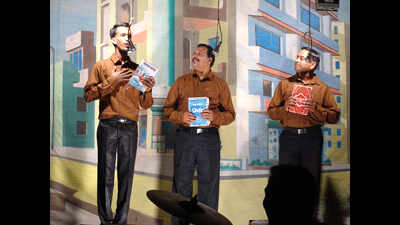
For those who believe that the soul of Judas Iscariot still struggles to escape purgatory, it must also be known that the man who ‘gave away’ Jesus to the Romans for 30 pieces of silver has accepted his fate…history will never remember him as anything but a traitor


Varca: For those who believe that the soul of Judas Iscariot still struggles to escape purgatory, it must also be known that the man who ‘gave away’ Jesus to the Romans for 30 pieces of silver has accepted his fate…history will never remember him as anything but a traitor.
In a fictional space, Cruz Pinto – director of the Lenten drama ‘Ghatki Judas’ (Judas, the betrayer) – portrays the apostle (played by Filipe Almeida) in conversation with Jesus.

Judas’s journey back on Earth doesn’t really see any closure through the story line of the play, but another way of looking at it is that the stories that unfold during the course of ‘Ghatki Judas’ are basically moments witnessed by Judas during his brief visit to the world. The tiatr resolves around a typical Goan family comprising a mother, Eugene (Dolla), her elder son Jackris (Menino Mario), younger son Joseph (Anil Pednekar) and their wives, both of whom are childless. It begins with a scene where Isabel (Roma), the elder son’s wife, announces that she is pregnant and Eugene is overjoyed that she will soon be a grandmother. But, the mood changes as soon as Mary (Olga), the other daughter-in-law, enters the home. Eugene curses and insults Mary for not giving her grandchildren and even threatens to have Joseph divorce her and remarry another girl who can conceive.
The tiatr bluntly discusses burning social topics such as abortion, infanticide, doctors and hospitals shunning their ethics and toying with people’s lives and emotions. It exalts Goa’s communal harmony and even dedicates two songs to assert that the Goan community is defined by its liberal, intermingling nature, where people across religious boundaries partake in one another’s good and bad times.
The plot is supported by well-timed comedy, especially by Max (Alvyn D’Souza, aka Junior Bachan) whose accent and actions on stage almost made the audience forget that the tiatr stretched way past their dinner time. Max’s mere entrance on to the stage would spark a giggle in the crowd, and his crazy yet feisty conversations with his nagging wife, Kate (Dorothy), has audiences choking with laughter. Santan (Aurelio), and Marie-Santan (Rudolfina) also play along, providing for some rib-tickling comedy.
Portraying two approaches towards relationships, the comedy hits home that love cannot be defined. There are sparring couples (such as Max and Kate), who seem incompatible, unromantic and on the verge of separation, but cannot bear to stay away from each other. Then, there are those like Santan and Marie-Santan that are too emotive and romantically inclined, but stand the risk of one little misunderstanding almost tearing them apart.
Following a few twists and turns, arguments and unfortunate deaths, both daughters-in-law miss out on becoming mothers. The elder delivers a blue baby, paying the price for all those newborns she sold as a nurse, while the younger one is forced to undergo an abortion by her husband who suspects that it wasn’t his child. The anxious closing scene is characterized by some strong advice from the director who plays a host of crucial roles in the tiatr.
‘Ghatki Judas’ is a beautifully conceptualized and well-enacted tale of how people continue to betray Jesus, and yet, blame it on a Jew who made a mistake thousands of years ago. Staged in front of a packed house at the Varca church campus, the tiatr didn’t allow its viewers an opportunity to leave midway, thanks to a power-packed performance by the actors and crooners. Nancy Gomes, Santan Crasto, Osvi Viegas, Bernard Fernandes and Evaristo Rodrigues lent their powerful voices to some thought-provoking lyrics.
Being the final act to be featured in TOI’s ‘Lenten Tiatr Festival’ series, ‘Ghatki Judas’ didn’t literally live up to its name. It instead portrayed a gripping storyline of the spirit of Lent, that featured a thought-provoking plot, tense moments interspersed with commendable comic relief and a synchronized live band that set the tone for the night.
End of Article
FOLLOW US ON SOCIAL MEDIA






Hot Picks
TOP TRENDING
Trending Stories
In City
Entire Website
- Top fastest trains in the world: From China's CR Harmony to Germany's ICE
- Amid Shannon Sharpe Viral Video, Former ESPN Host Michelle Beadle Reacts Claiming It Was Not Her
- 2 Army officers thrashed, their female friend gang-raped in Madhya Pradesh
- Ayushman Bharat insurance scheme expanded to cover elderly above 70
- 'Will be demolished if... ': Himachal minister's assurance amid Shimla mosque row
- Mumbai's Haji Ali and Mahim dargahs cancel Eid shamiana
- Garena Free Fire MAX redeem codes for September 11, 2024: Win free room cards, skins, diamonds, pet skins, and more rewards today
- GK for students: Top 8 Largest Mammals in the World
- Glut in milk production leaves Karnataka govt in spot of bother
- A tiny flower nearly killed a tiger habitat, until a snip in time saved it
- Mamata says 'ready to resign' as standoff with doctors over RG Kar case continues
- 'Leading light of the Left': Sitaram Yechury passes away; PM Modi, Rahul condole demise
- Actor dies in his sleep. Why sudden heart attacks are killing Indians
- 'Deal with it': Oppn vs BJP over PM Modi attending Ganpati Puja at CJI's house
- Watch: SpaceX conducts first private spacewalk; key details
- US Presidential Election Top 10: Is Donald Trump done as an orator?
- Why you should not be fooled by ‘20-year SIP crorepati’ dream
- What Airtel CEO Gopal Vittal wrote in letter to Jio, Vi, Tata Tele and BSNL CEOs
- Engineer Rashid says ready to support INDIA bloc but on this condition
- Vijay’s party will pose challenge to Dravidian parties: H Raja

Popular Categories
Hot on the Web
Top Trends
Trending Topics
Alia BhattMalaika Arora Father DeathArbaaz KhanNatasa StankovicMr Bachchan OTT ReleaseNational Parks In IndiaSelena GomezGOAT CollectionVikas Sethi DeathMalayalam ProducersIndia's Best Dancer 4Simi GarewalDilli BabuIndian National ParksLaung BenefitsVikas SethiiPhone 16Dubai Princess Sheikha MahraMG Windsor EvWordle Answer
Living and entertainment
Latest News
Epilepsy medication shows promise of treating sleep apnoea symptoms: StudyDigest this: Unhealthy gut may be linked to Parkinson’s disease'Played a big role in turning the cricket around': Ricky Ponting applauds Virat Kohli’s brilliance as India’s former captainAadhaar card update: Do you have to compulsorily update details on your Aadhaar every 10 years?Single Indians are now choosing slow, meaningful dates over-elaborate outings, reveals an online dating platform’s surveyExclusive- Saurabh Gumber reveals joining a new show during Ganeshotsav says, "I consider it as Bappa's small gift and believe he has great plans for me ahead"Pakistan: Bilawal cautions Shehbaz govt against political victimisation, points to Imran Khan's caseVijay Varma reveals he was DROPPED from 'Sacred Games' at the last minuteMahindra Thar Roxx with VIN 0001 to be auctiond for charity: How to registerVijay Sathya-starrer 'Dhil Raja' to release in SeptemberHarvard University Sees Drop in Black Freshman Enrollment Post-Supreme Court Ruling on Affirmative ActionFinding divinity in a world addicted to noiseHarvey Weinstein charged with additional crimes during hearing on rape chargesTovino Thomas praises Prithviraj Sukumaran as director: "One of the brilliant directors I have ever worked with"Border Gavaskar Trophy: When Sourav Ganguly's Brisbane heroics set the tone for an enlivening seriesNTR Jr’s Devara crosses US $1 million mark for its premiere shows in USA with 15 days to release8 animals that reproduce without matingIt will take time to get back to the top: Pakistan coach Zaman
Copyright © 2024 Bennett, Coleman & Co. Ltd. All rights reserved. For reprint rights: Times Syndication Service